Everything You Need to Know About Swarming Bees
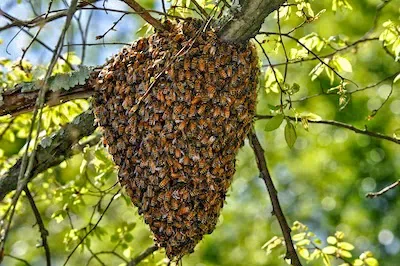
If you’re a new beekeeper, or even an experienced one, few things get your heart racing like the sight of thousands of bees pouring out of a hive in a swirling cloud. That’s a bee swarm in action, and it’s one of the most natural events in beekeeping.
Understanding swarming behavior helps you keep your colonies strong, prevent unwanted splits, and even catch a free swarm for your own apiary. In this guide, we’ll break down exactly what a swarm of bees is, why and when bees swarm most often, and the key conditions and signs you can watch for to predict (or prevent) swarming before it happens.
What Is a Bee Swarm?
A bee swarm is the colony’s natural way of reproducing at the colony level. Queen bees lay eggs in excess of 2000 a day and, when a honey bee hive gets too crowded or conditions are right, roughly half the worker bees (along with the old queen) leave the original hive to establish a new colony elsewhere.
The bees that remain in the parent hive raise a new queen from existing larvae, ensuring the original colony continues. The swarm itself clusters together, often on a nearby tree branch, fence post, or really anything they can hold on to, while scout bees search for a permanent home. Ideally one of your empty hive boxes! I’ve seen bees setup shop literally anywhere. Inside manhole covers, airplane cowlings, barbecues, underground utility boxes, attics/walls/crawlspaces of houses, the list goes on.
Fun fact for new beekeepers: Swarming bees are actually quite docile. They’ve filled up on honey before leaving, ‘drunk’ on the pheromones of the queen they are following, and aren’t protecting a hive or brood, so they rarely sting unless heavily provoked.
Why Do Bees Swarm?
Swarming is driven by two main instincts: reproduction and survival.
Overcrowding: As the colony grows rapidly in spring, the hive fills with bees, brood, and honey. When the queen no longer has enough space to lay eggs comfortably, the workers can start preparing to split.
Resource abundance: A strong honey flow (plenty of blooming flowers) provides the energy needed for half the colony to survive the journey and build new comb.
Queen pheromones: If the queen’s pheromone levels drop or she’s aging, workers sense it’s time for a new queen. They’ll create several queen cells to grow a new queen and this can initiate swarming.
Swarming could be a sign of a bad hive, but it can just as easily indicate a robust and healthy one. Left unchecked, it can leave your original hive weakened and reduce your honey harvest. When queens hatch they often seek out other queen cells and kill them off but at times multiple queens can hatch at once. This can lead to a condition where multiple follow-up swarms take place immediately after the first one, severely weakening the original hive. Vigilant beekeeping is necessary to understand what is going on inside your hive.
When Do Bees Swarm Most Often?
Swarming season peaks in spring and early summer when colonies explode in population and nectar flows are strongest. In most temperate regions (Arkansas and the southern U.S.), expect swarms from mid-April through June.
Prime swarm season: April to mid-May. Warm days, blooming trees, and rapidly growing colonies.
Afterswarms: Smaller follow-up swarms can occur into July/August if the parent hive still feels crowded.
Weather trigger: Swarms usually happen on warm, sunny, calm days between 10 a.m. and 4 p.m. Rain or cold snaps will delay them.
New beekeepers in the South: Keep an extra-close eye on your hives during dogwood, black locust, and clover blooms. These are classic swarm signals in Arkansas as their blooming indicates the start of a honey flow.
Signs Your Hive Is About to Swarm: What to Watch For
The best way to manage swarming is to catch the warning signs early, ideally 7–10 days before the bees take off. Here are the top conditions and visual cues every beekeeper should check during routine inspections:
Overcrowded Hive: Frames are packed solid with brood and honey. You see little empty comb for the queen to lay in. Bees may even start “bearding” or hanging out in a thick curtain at the entrance on hot afternoons. (Note: bearding also takes place when humidity is high and the bees are trying to get air flowing through their hive)
Swarm Cells (Queen Cells on the Bottom Bars): This is the #1 giveaway. Look for large, peanut-shaped cells hanging off the bottom of the frames (not the face). These are swarm cells. If you see 6–12 of them along the lower edges, the hive is likely preparing to swarm within a week.
Backfilled Brood Nest: Workers are filling the center brood frames with nectar instead of leaving space for the queen. This “backfilling” signals the colony is running out of room. (note: backfilling can also occur when the workers are slowing the production of brood prior to winter or when a dearth happens.)
Reduced Foraging Activity: You suddenly notice fewer bees flying in and out, even though the weather is perfect. Many foragers are staying home to prepare for the swarm.
Queen Activity Slows: The queen may look smaller or you’ll see less fresh brood. Workers are already feeding her less royal jelly in preparation for flight.
Pro tip: Mark your calendar and inspect every 7–10 days during swarm season. If you spot swarm cells, you have time to act! Queens hatch in just 16 days. Skipping an inspection can leave you unaware that they even started a new queen then BAM! Swarm happens.
Quick Tips to Prevent or Manage Swarming
While you can’t stop swarming entirely, you can manage it:
Add supers or split the hive before it gets too crowded.
Remove swarm cells, but only if you’re sure they’re not emergency cells from a lost queen (find the current queen!).
Consider a “swarm trap” baited with lemongrass oil near your apiary.
Catching a swarm is one of the coolest parts of beekeeping! Free Bees!
Stay Ahead of the Swarm
Swarming is nature’s way of making more bees, but with regular inspections and a little planning, you can turn potential chaos into colony growth and extra honey. Whether you’re checking your first nuc or managing a dozen hives, knowing the what, why, when, and how of bee swarming keeps your apiary healthy and productive.
